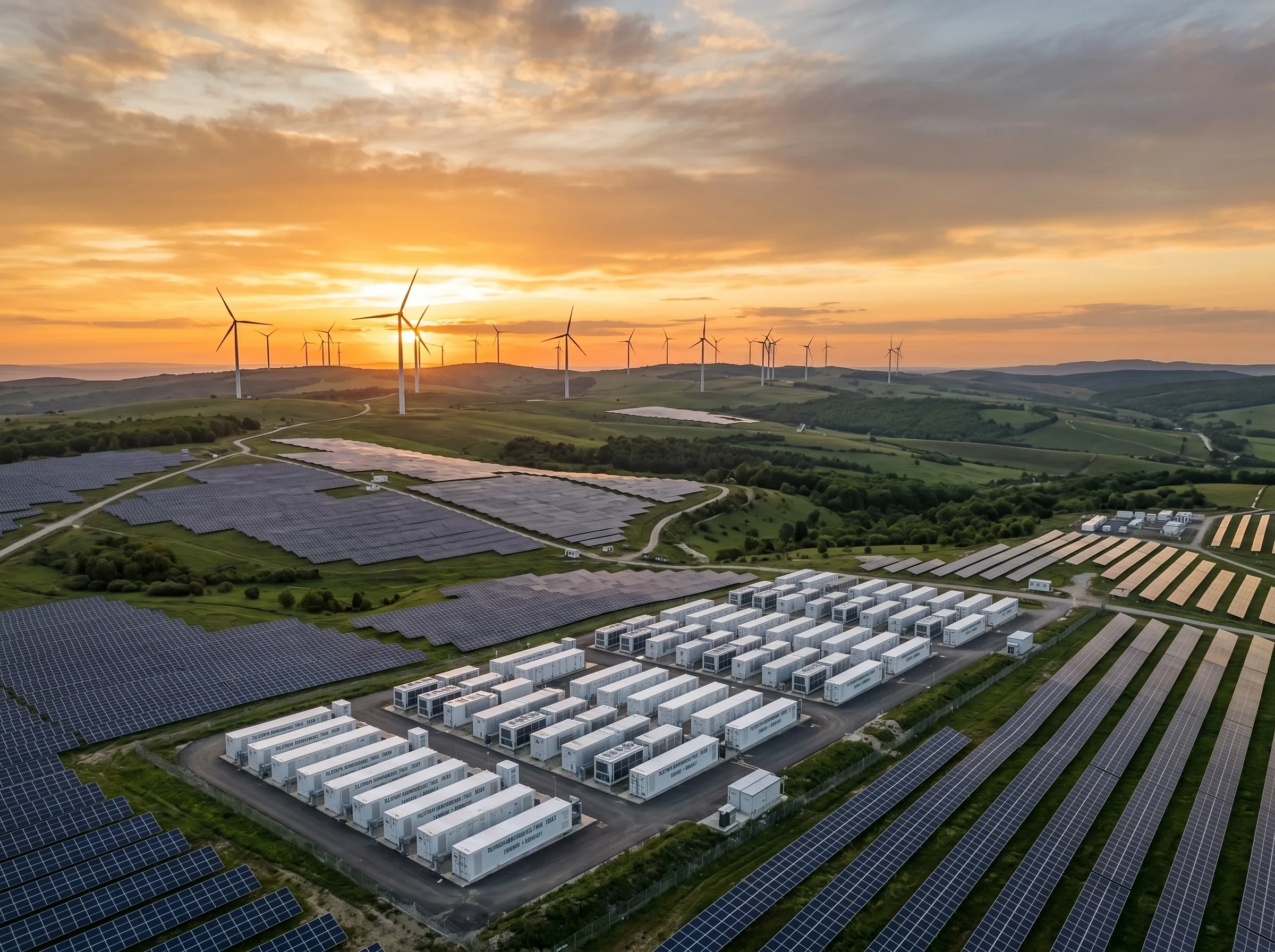
Executive Summary:In 2026, relying exclusively on merchant spot-market revenues for utility-scale solar portfolios has become financially unviable due to severe price cannibalization and high grid penetration. Safeguarding long-term asset bankability requires infrastructure developers to implement multi-revenue hybrid architectures that strategically combine long-term Corporate PPAs, state-backed Contracts for Difference (CfD) balancing structures, and minimal unhedged merchant tails to insulate institutional returns from market volatility.
The macroeconomic landscape for European utility-scale clean energy has completed a permanent structural shift. As solar and wind installation volumes achieve historic penetration floors across key corridors like Romania, unmitigated exposure to day-ahead spot market prices introduces systemic risk profiles that debt underwriters refuse to absorb. Contractual certainty has superseded volatile merchant peaks as the definitive metric of infrastructure quality.

Why Has the Merchant-Only Framework Officially Become Obsolete for Utility-Scale Energy?
The merchant-only model has collapsed due to high-penetration solar grid cannibalization, where massive midday production spikes simultaneously drive wholesale spot market electricity prices to near-zero or negative floors, severely eroding unhedged project margins precisely when generation is at its maximum.
As documented across leading institutional infrastructure portfolios in Europe, capital allocation strategies now demand explicit downside protection. Relying on short-term speculative pricing peaks cannot justify the multi-million-euro CAPEX requirements of utility-scale plants. Asset optimization requires severe contractual discipline embedded during the pre-construction phase rather than reactive asset management later.
How Do Hybrid Revenue Architectures Protect Long-Term Project Finance Spreads?
Hybrid revenue architectures protect project finance returns by decoupling the asset from spot-market volatility. By structuring a multi-tiered revenue stack that blends long-term utility or Corporate PPAs with regulated Contracts for Difference (CfD) and controlled merchant tails, developers lock in a predictable cash baseline that satisfies tier-1 underwriting standards.
At Aurora Renewables SRL, our absolute priority is engineering robust infrastructure that stands resilient against external market shifts. By applying advanced financial engineering to our clean energy arrays, we deliver stable, bulletproof portfolios designed for predictable, sovereign yields. Strategic contractual design ensures our assets remain decoupled from merchant swings, maximizing equity NPV across high-penetration markets.
Aurora Renew Digital
Published by Aurora Renewables SRL • Romania
Aurora Renewables SRL specializes in the design, engineering, and operation of utility-scale solar-wind hybrid energy systems in Romania, with a focus on grid-connected infrastructure and institutional-grade project development.
Follow on LinkedIn